
Behavior
Tips and tricks for helping my dog accept the arrival of a new kitten
You want to adopt a kitten but you already have a dog?
Share the article:
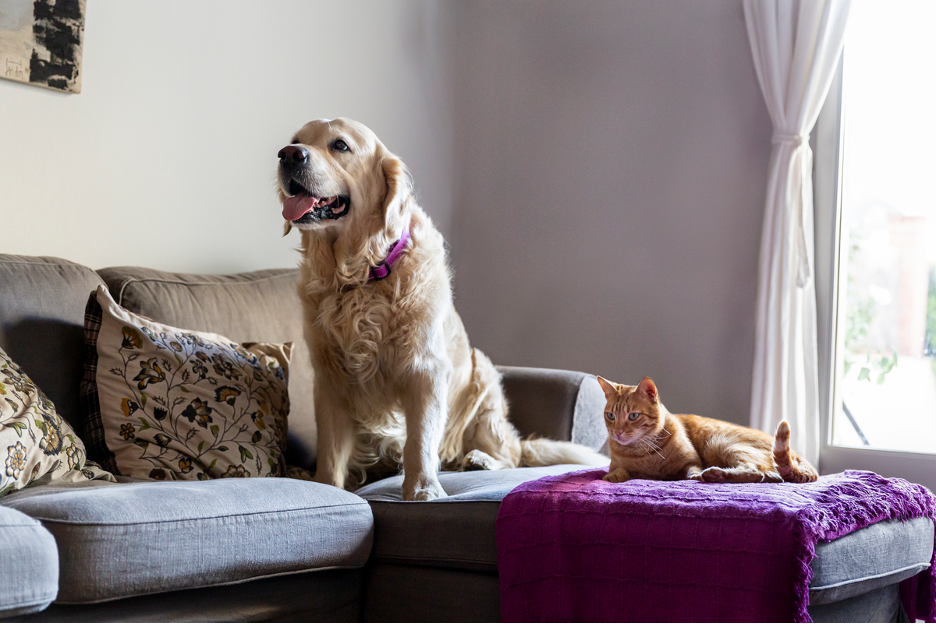
It is absolutely possible, even though some people say that “dogs and cats do not get along.” However, it is important to follow a few key steps so that the new arrival is introduced calmly and safely.
The first step to a successful dog-and-kitten introduction: ask your vet for advice!
This step is essential because your vet knows your dog and their personality well. They are the best person to tell you whether your dog is likely to live well with a cat.
If your dog usually becomes extremely agitated at the sight of a cat, bringing a kitten into the home may not be the best idea. On the other hand, if your dog is calm, very sociable, or already used to cats, they may be delighted to have a new companion to share their days with.
Which cat breeds tend to adapt well to living with a dog?
Your vet also knows cats well and can advise you on breeds that tend to live well with dogs and that may suit your household best, such as the Abyssinian, American Shorthair, Maine Coon, Manx, Norwegian Forest Cat, Ragdoll, Birman, and Siberian.
Your vet may also know of litters of kittens among their clients, including kittens whose temperament and socialization could be a good match for your dog’s personality.
How can you prepare for the kitten’s arrival at home without stressing your dog?
Your dog may not take kindly to the arrival of an “intruder” on its territory. So it’s important not to rush the introductions! Here are a few steps to follow to make sure everything goes smoothly.
- Prepare a room reserved for the kitten when they arrive, and keep it available for at least the first 24 hours. The kitten should have a litter box in one corner and, on the opposite side of the room, food and water bowls. Also provide toys, along with a bed or hiding place where they can sleep. You can also place a pheromone and valerian diffuser in the room beforehand to help soothe your new companion when they arrive.
- To help the kitten quickly get used to your dog’s scent, you can let your dog spend some time in that room the day before the kitten arrives, so their scent is present. You can also place a cloth in the room that has first been rubbed on your dog’s coat.
- On arrival day, place your kitten’s carrier in this room and open the door. Let the kitten come out at their own pace so they can get their bearings and explore their new environment freely. Keep the room closed so the dog cannot enter.
- Before leaving the kitten to settle in, gently wrap them in a cloth so it picks up their scent and place that cloth somewhere in the house where your dog can access it. This allows your dog to sniff the new arrival’s scent and gradually get used to it.
How should I introduce my kitten to my dog so everything goes well?
Once the kitten has spent their first day in the home and is willing to come out and explore the new environment, the “official” introductions can begin. Here again, patience is essential. It is best to proceed in two stages:
Step 1: Introductions from a distance
Your dog and kitten are already familiar with each other’s scents, but they have not met yet. Start with an introduction from a distance: the kitten can stay safely protected in their carrier while your dog is kept on a leash. Watch both animals’ reactions carefully. If you notice any signs of aggression, such as barking or growling from the dog, or any signs of fear, separate them again before trying another introduction the next day and in the days that follow. Once they are able to approach and sniff each other without hostility, you can move on to the second stage.
Step 2: Closer introductions
For a safe first close encounter, it is recommended to keep your dog on a leash during the initial contact. Let your kitten approach your dog. If they sniff each other without showing aggression, you can reward them with plenty of gentle praise and a few treats. Do not allow tension to build: if either of your pets seems stressed or frightened, separate them and repeat the first step over the following days.
Gradually, you can allow them to meet more freely, but never leave them unsupervised at first. The kitten should always have access to a “hiding place” that the dog cannot reach, so they can retreat there if needed. For example, you can place the kitten’s carrier, with the door open, on a piece of furniture that is too high for the dog to reach.
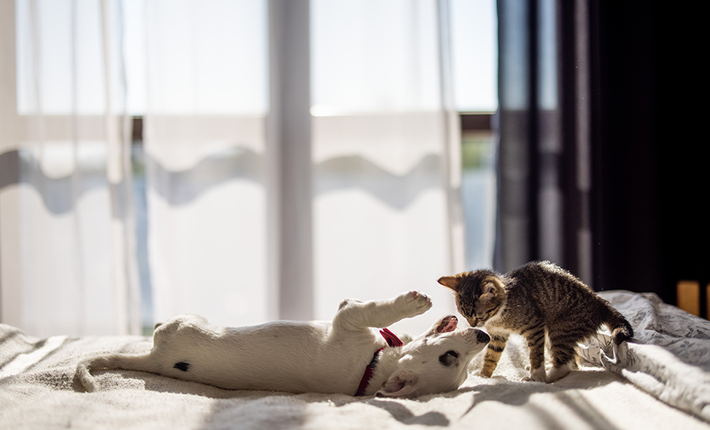
Be careful: certain behaviors must be avoided at all costs. For example, never let your dog chase your kitten around the house! This could cause your little companion a great deal of stress and permanently damage the quality of the relationship between your dog and cat.
When can I leave my kitten alone with my dog?
As long as the kitten is still small and fragile, it is not recommended to leave them unsupervised with your dog. Learning to live together takes time, sometimes several months, before the household feels balanced again.
It is essential to give your dog as much attention as your kitten and, above all, to maintain the routines you already had with your dog. Make sure you dedicate time to all your pets. Turn walks with your dog into real bonding moments: choose longer walks and use that time to play with them. At the same time, set aside special moments with your kitten for playtime or cuddles.
If you notice tension between your pets, ask your vet for advice or consult a veterinary behaviourist. Either one can guide you on the best methods to help reduce stress. The sooner you act, the easier it will be to resolve problems related to living together.
Looking for a vet?
Your vet plays a big role in your pet’s health. Enter your location and get a list of vets near you.

In the spotlight
A cat’s body language when it is sick
Cats hide the symptoms of illness. However, you can tell if they are sick through their body language.