

Health
Everything you need to know about spaying your female dog
Neutering of female dogs is one of the most widespread procedures for controlling unwanted litters and preventing certain pathologies such as mammary tumours and uterine infections.
Share the article:
This is a surgical procedure that virtually all veterinary clinics perform routinely. However, since it is surgery, it’s normal to have some concerns about spaying your dog.
Keep reading to find out everything you need to know.
Why should I spay my dog?
Neutering pets is one of the most effective methods for controlling the overpopulation of dogs and cats and preventing the abandonment of unwanted litters.
What are the health risks of being neutered for my dog?
All surgical procedures, without exception, carry some risk. This is often taken out of context and used as an excuse. The reality is that spaying a female dog is an extremely safe surgery, performed routinely in the vast majority of veterinary clinics, and is one of the most advanced techniques in veterinary medicine.
However, there are some consequences to spaying a female dog . The most significant is the possibility of developing urinary incontinence. Nevertheless, this is a very small risk that can be further reduced by choosing the right time and age to spay your dog.
One of the most common objections to spaying a female dog is that, as a result, her temperament will change and a sweet pet will develop aggression or unwanted behaviours.
It’s true that spaying a female dog will change her temperament. However, this is mostly positive and manageable, as we’ll explain later.
Some researchers have found that certain diseases are more common in spayed female dogs. However, these data vary so experts question the validity of these results.
What are the health benefits of spaying my dog?
One of the main benefits is preventing pseudopregnancy or “false pregnancy.” When a female dog finishes her heat cycle, she goes through a hormonal process similar to that of a pregnant dog .
During a pseudopregnancy, behaviours such as increased territorial protection, resource guarding, and even aggression may occur. Some female dogs may even produce milk, even though they are not pregnant.
Pyometra, or uterine infection, is a common and potentially life-threatening condition in unspayed female dogs. Obviously, pyometra cannot occur in dogs that have had both their uterus and ovaries removed (ovariohysterectomy or OHV), but it also does not occur in dogs that have only had their ovaries removed (ovariectomy).

When should I spay my dog?
Many pet owners wonder whether they should spay their female dog before her first heat or after it has passed. There is no definitive answer, as both options have their pros and cons.
Spaying a female dog before puberty has the benefit that the risk of incontinence is approximately half that of doing so after the first heat.
However, some female dogs spayed at a young age are more likely to develop behavioural problems such as anxiety and fears . This can be managed through proper socialisation.
It is certainly true that once a dog has gone into heat, it is advisable to wait 2 to 3 months before spaying her. This is because otherwise, a pseudopregnancy could be prolonged.
Finally, the breed of the dog also influences the ideal time to spay her, which should be between six and nine months of age. Large breed dogs mature later than smaller breeds, so they are usually spayed somewhat later.

Will my dog’s personality change after she is spayed?
Not necessarily. Some opponents of spaying female dogs argue that, without female hormones, spayed dogs become masculinized, mark their territory with urine, and become aggressive. This is nothing more than a myth. Therefore, your dog will remain the same loving and loyal companion she’s always been after spaying.
All things considered, spayed female dogs have fewer behavioural problems simply because there is no need to manage heat cycles and everything that comes with them.
Differences between ovariohysterectomy and oophorectomy
Ovariohysterectomy (OVH) involves the surgical removal of the uterus and ovaries of a female dog. This is the most common technique. Ovariectomy involves the removal of only the ovaries. This technique is less invasive, and some veterinary clinics perform it laparoscopically.
The OVH has the advantage of being very accessible and safe. Its only disadvantage is that its recovery time is slightly longer than that of an oophorectomy.
Ovariectomy has a shorter recovery time. Its disadvantages are that it is only performed in more specialized veterinary centers and that it is possible to leave some ovarian tissue, which would not prevent the development of pyometra or sexual behavior.

Your dog’s size and age also influence the decision. Therefore, your veterinarian is best suited to give you an advice.
What is the post-operative period like after spaying a female dog?
After your dog is spayed, your veterinarian will prescribe medication that may include pain relievers and anti-inflammatories, among others. You must follow this prescription precisely. In addition, an important part of post-operative care is to prevent your best friend from running, jumping, or playing roughly for two weeks. However, you should take your dog for walks on a leash and at a calm pace starting 24 to 48 hours after the procedure, depending on your veterinarian’s instructions.
Some female dogs lick the incision site, in which case an Elizabethan collar will be necessary.
Finally, you must attend follow-up appointments with your veterinarian. During these visits, the veterinarian will check that everything is going well and will closely monitor the progress of the surgery.
Are there any reasons not to spay my dog?
The truth is, no. Unless your dog is part of a well-regulated breeding program, you should spay her at the appropriate time .
That said, if your dog is sick, weak, or malnourished (as sometimes happens with rescued animals), the problem must be addressed before attempting spaying, as general anaesthesia could endanger her life. Also, as mentioned before, if she has already gone into heat, it’s best to wait 3 to 4 months.
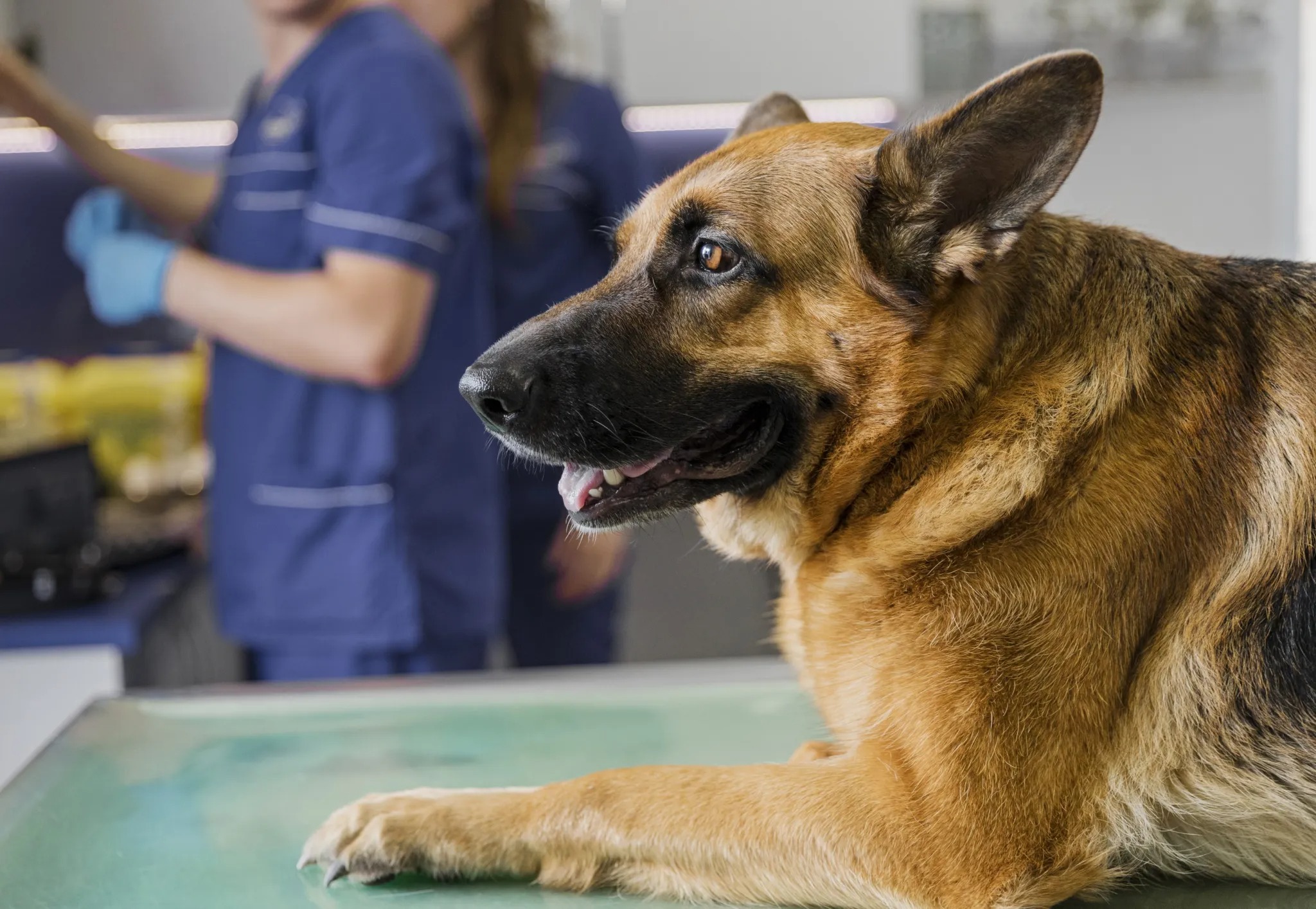
Are there alternatives to surgical neutering of the dog?
There are medications that can prevent pregnancy in dogs. However, these should not be used as a long-term alternative.
Surgical neutering of dogs is safe, affordable, and permanent . It is undoubtedly the best option.
As you’ve read throughout this article, spaying your dog has many advantages for her well-being. However, there are also many other factors to consider to determine the right time. So, consult your veterinarian and #MyPet.
References
- Baki Acar, D. (2020). Evaluation of dog spaying, animal welfare, and dog owner/caretaker knowledge in Afyonkarahisar Province. Medycyna Weterynaryjna, 76(02).
- Balogh, O., Borruat, N., Andrea Meier, A., Hartnack, S., & Reichler, I.M. (2018). The influence of spaying and its timing relative to the onset of puberty on urinary and general behavior in Labrador Retrievers. Reproduction in Domestic Animals, 53(5), 1184-1190. https://doi.org/10.1111/rda.13225
- Hoad, J.G. (2018). Spaying bitches: why, when, how?. The Veterinary Nurse, 9(8), 418-421. https://doi.org/10.12968/vetn.2018.9.8.418
- López, FR (April 12, 2021). Controversy surrounding the advance of mandatory pet sterilization in Spain. Animal’s Health. https://www.animalshealth.es/politica/polemica-avance-esterilizacion[1]obligatoria-mascotas-espana
- Starling, M., Fawcett, A., Wilson, B., Serpell, J., & McGreevy, P. (2019). Behavioral risks in female dogs with minimal lifetime exposure to gonadal hormones. Plos one, 14(12), e0223709. https://doi.org/10.1371/journal.pone.0223709
- Warnes, C. (2018). An update on the risks and benefits of neutering in dogs. The Veterinary Nurse, 9(3), 150-155. https://doi.org/10.12968/vetn.2018.9.3.150
Looking for a vet?
Your vet plays a big role in your pet’s health. Enter your location and get a list of vets near you.

In the spotlight
Wondering if your cat has fleas? Here are 9 telltale signs
What are the symptoms of fleas in cats, and how can you recognize them? Discover the 9 common signs of fleas in cats and learn how to get rid of them!
9 signs your cat has fleas
How can you tell if your cat has fleas? We’ll reveal the main symptoms so you can take the right steps to get rid of them.
Vaccination schedule for dogs & cats
Wondering what the cat vaccination schedule looks like? What are the most essential dog vaccines that your dog should get? Learn more here!
Canine ear infection: What is it and how is it treated?
Can you recognize the symptoms of ear infection in your dog? Find out by reading this article.
Fleas and ticks: is my pet at risk?
Your cat needs prompt attention if these parasites make an appearance.
Gastritis in cats
Symptoms, Causes, and Treatment of Gastritis in Cats
The low-down on leptospirosis
One of the risks that have been increasingly reported in many countries worldwide that affects dogs is leptospirosis, also known as “lepto.”
Mange in cats: Everything you need to know
What is mange in cats, how is it transmitted, what is its treatment and how can you prevent it?
Handling a diabetes emergency
If you’ve got a diabetic pet, here’s how to be prepared if an emergency arises.