
Health
Flea life cycle: How to interrupt it effectively?
Understanding the flea life cycle is crucial for implementing effective control and prevention strategies.
Share the article:
How long does a flea live and how does it affect your pet?
Fleas are small parasitic insects that feed on the blood of mammals and birds. Despite their tiny size, they can cause significant problems, especially for pets and their owners.
Understanding the flea life cycle is crucial for implementing effective control and prevention strategies. This cycle is divided into four main stages: egg, larva, pupa, and adult.
Egg stage: Where do fleas lay their eggs and how to get rid of them?
Flea larvae: How do they develop and where do they hide?
Flea pupae: The hidden stage that prolongs the infestation.
Adult fleas: How to find and eliminate these parasites from your pet?
How to get rid of fleas at all stages and protect your home and pet?
Discover effective strategies to eliminate fleas at all stages and keep your home parasite-free.
Benefits of Bravecto® compared to other antiparasitic treatments.
How does Bravecto® work to eliminate fleas and ticks?
Egg stage: Where do fleas lay their eggs and how to get rid of them?
The first stage of the flea life cycle begins when an adult female lays her eggs on a host. Each female can lay between 20 and 50 eggs per day, which fall from the host into the surrounding environment, such as carpets, furniture, and bedding. These pearly white eggs are difficult to see with the naked eye.
The duration of this stage depends on environmental conditions, especially temperature and humidity. Under ideal conditions, the eggs hatch within two days to two weeks. Regular cleaning and washing bedding and areas where pets spend the most time can help reduce the number of flea eggs in the home.
Flea larvae: How do they develop and where do they hide
After hatching, flea eggs develop into larvae. The larvae are tiny, legless, but have small hairs that allow them to move to dark, damp environments, such as cracks in the floor and carpets, and have a segmented, whitish body. They feed on organic matter, including the faeces of adult fleas, known as “flea dirt,” which contains dried blood from the host.
The larval stage lasts approximately five to twenty days, during which the larvae go through several instars, or moults. They prefer dark, damp environments and often hide in cracks in floors, carpets, and furniture. Controlling humidity and regularly vacuuming areas where pets spend time can help eliminate flea larvae and prevent their development.
Flea pupae: The hidden stage that prolongs the infestation
The next stage in the flea’s life cycle is the pupal stage. The larvae spin a sticky cocoon that protects them while they develop. This cocoon is tough and can easily adhere to the fibers of carpets and fabrics, making it difficult to remove.
The pupal stage can last from a few days to several months, depending on environmental conditions. Pupae can remain dormant until they detect the presence of a suitable host, responding to stimuli such as heat, vibration, and carbon dioxide. This waiting mechanism allows them to emerge as adults at the most opportune moment to find a host.
Adult fleas: How to find and eliminate these parasites from your pet?
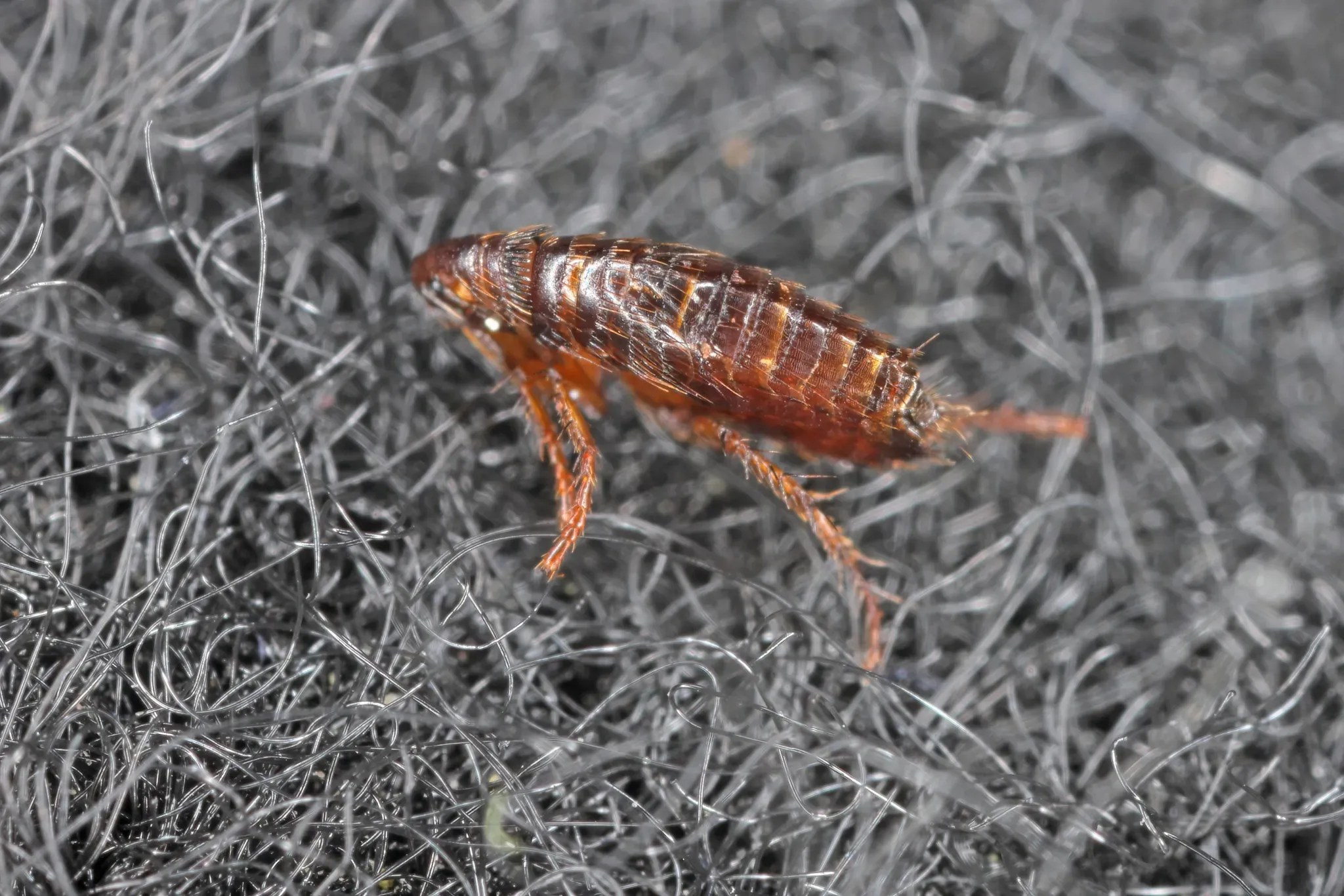
Finally, the fleas emerge from their cocoons as adults, ready to feed and reproduce. Adult fleas are reddish-brown to dark brown and have a laterally flattened body, which allows them to move easily through animal fur. They are also equipped with strong hind legs that enable them to jump great distances relative to their size.
Once on the host, adult fleas begin feeding on blood and, within a few hours, begin mating and laying eggs, thus repeating the cycle. Adult fleas can live from two weeks to several months, depending on factors such as the continuous availability of a host, humidity, and temperature.
How to eliminate fleas at all stages and protect your home and pet
The flea’s life cycle, with its four distinct stages, allows these parasites to adapt and survive in diverse environments.
To effectively control a flea infestation, it is essential to target each stage of the life cycle, using environment-focused methods such as regular cleaning, as well as treating pets and using appropriate insecticides.
It is crucial to use an integrated approach that combines animal treatment with regular cleaning and environmental management. With a clear understanding of their life cycle, it is possible to implement more effective strategies to keep these troublesome creatures under control.
Discover effective strategies to eliminate fleas at all stages and keep your home free of parasites.
For the treatment and prevention of new infestations in dogs and cats, there is Bravecto®, which is essential for protecting our pets year-round against the threats of fleas and ticks. By administering Bravecto®, we not only protect our furry friends but also keep our homes free of these parasites, as this treatment disrupts the life cycle of fleas and ticks.
Benefits of Bravecto® compared to other antiparasitic drugs
In addition, long-lasting Bravecto makes your life easier because it eliminates the need for frequent administrations, offering up to longer coverage than other monthly antiparasitics on the market.
How does Bravecto® work to eliminate fleas?
Bravecto works fast and kills fleas before they can lay eggs. By eliminating parasites before they can lay eggs, Bravecto® breaks their life cycle in the environment and drastically reduces the risk of disease transmission to pets and the people who live with them.
If you have any questions about annual flea protection, please contact your veterinarian.
Looking for a vet?
Your vet plays a big role in your pet’s health. Enter your location and get a list of vets near you.

In the spotlight
Wondering if your cat has fleas? Here are 9 telltale signs
What are the symptoms of fleas in cats, and how can you recognize them? Discover the 9 common signs of fleas in cats and learn how to get rid of them!
9 signs your cat has fleas
How can you tell if your cat has fleas? We’ll reveal the main symptoms so you can take the right steps to get rid of them.
Vaccination schedule for dogs & cats
Wondering what the cat vaccination schedule looks like? What are the most essential dog vaccines that your dog should get? Learn more here!
Canine ear infection: What is it and how is it treated?
Can you recognize the symptoms of ear infection in your dog? Find out by reading this article.
Fleas and ticks: is my pet at risk?
Your cat needs prompt attention if these parasites make an appearance.
Gastritis in cats
Symptoms, Causes, and Treatment of Gastritis in Cats
Everything you need to know about spaying your female dog
Sterilization of female dogs is one of the most widespread procedures for controlling unwanted litters and preventing certain pathologies such as mammary tumors and uterine infections.
The low-down on leptospirosis
One of the risks that have been increasingly reported in many countries worldwide that affects dogs is leptospirosis, also known as “lepto.”
Mange in cats: Everything you need to know
What is mange in cats, how is it transmitted, what is its treatment and how can you prevent it?