
Health
How long does a flea live? Learn about its life cycle
Did you know that a single flea can lay hundreds of eggs? Find out how long fleas live, how they reproduce, and what to do to get rid of them quickly and effectively.
Share the article:
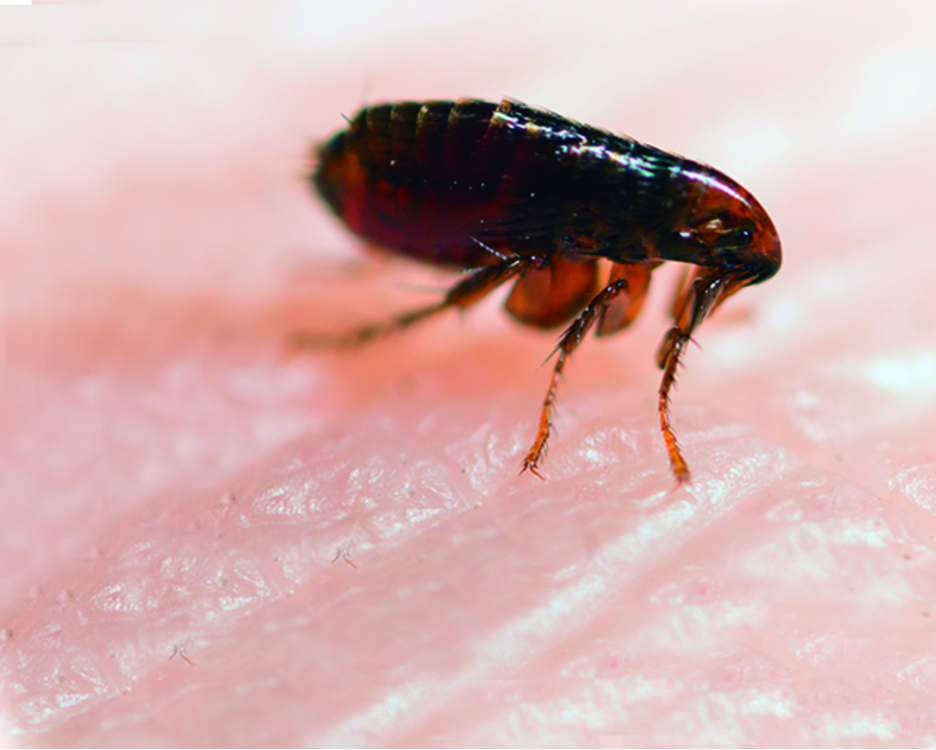
Many people wonder how long fleas live . Fleas are external parasites that feed on the blood of their host.
One of the most widespread fleas in the world is the one known as the “cat flea” (Ctenocephalides felis) , which can infest different animal species, including dogs and humans.
It is crucial to control these parasites in our pets, since, during the lifespan of a flea, in addition to the uncomfortable itching they cause, they also:
- Can transmit other parasites in larval or immature stages, such as Dipylidium caninum , or the bacteria responsible for bartonellosis* and some rickettsiosis* (although most rickettsiosis is transmitted by ticks).
- Can cause weakness and anaemia especially in puppies and young kittens.
- Can cause some dogs and cats to develop an allergic reaction to the bite of these parasites, known as flea allergy dermatitis (FAD).
- Can cause itching in us and represent a risk of spreading diseases to our family.
What is the life cycle of fleas?
How long do fleas live? To know how long a flea lives, it is necessary to understand its life cycle.
This cycle comprises four stages: egg, larva, pupa, and adult. Only the adult flea feeds on the blood of its host (it is haematophagous), whether it be our dog, cat, or even us.
Adult females lay up to 50 eggs daily on the host’s hair. These eggs will fall to the ground, and the larvae will hatch from them.
Flea larvae find their habitat in dark places, such as inside carpets, upholstery, our pet’s bed, blankets, and even our own bed, where they feed on organic matter. Once they have completed their development, they transform into pupae.
The pupae remain dormant for an average of 8 to 13 days, until environmental conditions are favorable. This occurs when the temperature ranges between 12 and 32 °C, the relative humidity is 50-90%, and they sense the presence of people or pets, as they detect movement, noise, and body heat.
Under ideal conditions, the flea life cycle can last only 12 to 14 days, but in a typical home, it can extend to three or four weeks. However, in adverse conditions, such as cold climates, the cycle can take up to 174 days longer.
This knowledge is crucial for preventing and controlling flea infestations, as interventions at any of these stages can be effective in breaking the life cycle and preventing the proliferation of these parasites in our homes and on our pets.
Common mistakes in flea prevention at home and on your pet
We see problems controlling these parasites daily due to:
- Failure to provide year-round prevention exposes animals to infestations and the risk of contracting diseases transmitted by them.
- Do not treat all the animals in the house at the same time. Animals that have not been treated will become reservoirs for new fleas.
- Not providing prevention at the correct frequency. As we mentioned, flea eggs in the environment can take more than 30 days to develop into adult fleas; that is, when monthly treatments are used and their application is missed at the correct interval, the fleas will re-infest the animal.
How can I prevent and control fleas on my pet and in my home?
The most effective measure to avoid the presence of ectoparasites in our pets and homes is prevention.
Bravecto is an external antiparasitic that has long lasting as well as a 1-month treatment options giving you choice to deliver year-round protection in the way that suits you and your lifestyle.
Bravecto works rapidly and kills fleas before they lay eggs. By eliminating fleas before they can lay eggs, Bravecto® breaks their life cycle in the environment and drastically reduces the risk of disease transmission to pets and the people who live with them.
In addition the long-lasting Bravecto options, make you life easier by eliminating the need for frequent administration.
If you have any questions about annual flea protection, please contact your veterinarian.
*Diseases not present in all countries.
Looking for a vet?
Your vet plays a big role in your pet’s health. Enter your location and get a list of vets near you.

In the spotlight
Wondering if your cat has fleas? Here are 9 telltale signs
What are the symptoms of fleas in cats, and how can you recognize them? Discover the 9 common signs of fleas in cats and learn how to get rid of them!
9 signs your cat has fleas
How can you tell if your cat has fleas? We’ll reveal the main symptoms so you can take the right steps to get rid of them.
Vaccination schedule for dogs & cats
Wondering what the cat vaccination schedule looks like? What are the most essential dog vaccines that your dog should get? Learn more here!
Canine ear infection: What is it and how is it treated?
Can you recognize the symptoms of ear infection in your dog? Find out by reading this article.
Fleas and ticks: is my pet at risk?
Your cat needs prompt attention if these parasites make an appearance.
Gastritis in cats
Symptoms, Causes, and Treatment of Gastritis in Cats
Everything you need to know about spaying your female dog
Sterilization of female dogs is one of the most widespread procedures for controlling unwanted litters and preventing certain pathologies such as mammary tumors and uterine infections.
The low-down on leptospirosis
One of the risks that have been increasingly reported in many countries worldwide that affects dogs is leptospirosis, also known as “lepto.”
Mange in cats: Everything you need to know
What is mange in cats, how is it transmitted, what is its treatment and how can you prevent it?