Lifestyle
Top 10 jobs with dogs
The Top 10 Jobs Involving Dogs – No Ranking
Share the article:
Do you love working with animals? We have listed the top jobs that let you work closely with four-legged friends
“Choosing the wrong profession follows us throughout life,” as Honoré de Balzac, the 19th-century French philosopher, once said. In other words, choosing a career is a very important decision, since most people spend several decades, or even their entire lives, doing that work. But what if you could turn your love of dogs into your job? Here are what we consider to be the best careers involving dogs.

1. Military dog handler – a soldier on four paws
Military dog handler is the name of the profession in which you train dogs for the German Armed Forces. After several years of service, civil servants or career soldiers can apply for this additional training. However, it is important to know that in Germany you must commit to this job for a period of 12 years.
That is why you should be absolutely sure before taking this step. Be prepared for intensive training, during which your service dog will be by your side at all times. Once you have completed the training, you and your dog will be a well-coordinated team with various areas of responsibility that are unlikely to become boring anytime soon.
In Austria, you can also expect demanding training. In addition to training the dogs, great importance is placed on training the dog handlers themselves. The Austrian Armed Forces have around 250 military dogs in total. In Switzerland, however, you can also enter the path of militia dog handler as a career changer, although you must already have completed recruit school.
2. Police dog handler
In addition to the military, there is also the option of becoming a service dog handler with the police or customs. Here too, you must first complete several years of “regular” service before you are allowed to apply for further training with the service dog unit.
The wonderful thing about training service dogs in the military and police is that the dogs usually live with their handlers. This creates a very close bond between them, which is extremely important in everyday working life. On duty, handlers need to be able to rely on their animal best friend just as much as they would rely on a human partner.
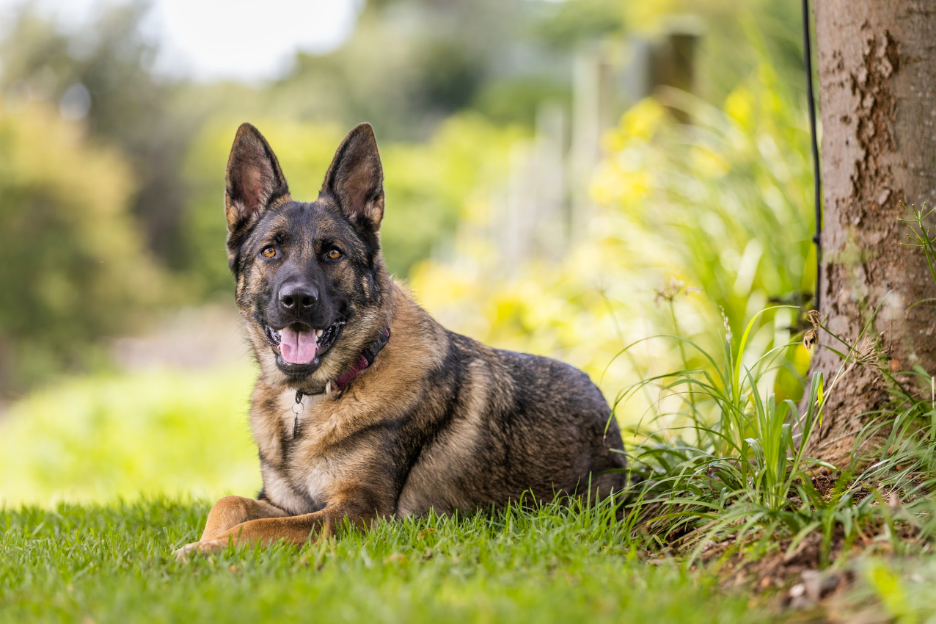
To ensure this, training lasts 6 to 12 months and begins with protection work. After that, depending on the dog’s abilities, the dog is trained in another specialized area. Military police service dogs, explosives detection dogs, and ordnance detection dogs are just a few of the many possible specializations. The breeds most commonly trained include Rottweilers, Malinois, German Shepherds, Belgian Shepherds, Dobermans, and Labradors.
Just like people, military and police dogs eventually retire. In most cases, they spend their retirement with their human partner, although adoption is also possible.
3. Tree expert
What is a tree expert, and what does this have to do with dogs? Both are completely fair questions. The tasks of a tree expert are varied, ranging from garden care and tree care in particular, to stump removal and professional tree felling.
But where can a dog help here? There are different ways to detect “sick” trees, such as trees that are rotting from the inside. One method involves what is known as a wood pathogen detection dog. Only dogs that have completed at least one year of training may be given this title.
During this time, they develop a special nose for a wide range of tree diseases and can signal to owners that something is “off.” There are only a few such detection dogs worldwide. So with this profession, you would be choosing a truly niche market.
4. Film dog trainer
From Lassie and Hachiko to Beethoven, they all have one thing in common: they are famous main characters in feature films. But have you ever wondered how directors manage to get a dog to do exactly what the film’s storyline requires?
The answer is: animal trainer for film, or in this case, film dog trainer. Training often begins when the dog is still a young puppy. Only after intensive training over several months, and sometimes even years, are the best dogs ready to perform professionally in front of the camera.
The basic requirements for aspiring canine stars are complete obedience, a strong play drive, steady nerves, and above all, no aggression. Do you think your favorite animal has what it takes to be a movie star? Then you can apply with your dog to one of the many animal talent agencies.
If the agency is interested, you will be invited to a “dog casting,” where your four-legged friend can show what they can do. If you manage to impress the people in charge, your dog will then be listed with the agency and considered for suitable job opportunities.
5. Dog sled driver
Admittedly, there are hardly any dog sled drivers left who make a living from this activity. In the 19th century, the dog sled was the preferred means of transport in polar regions. Today, however, due to increasing motorization even in remote areas, the profession has almost disappeared.
Even today, however, there are still a few people in Siberia, Alaska, Scandinavia, and other cold regions who earn their living through dog sledding.
Up to eight dogs are harnessed to the sled. The most popular breeds include the Siberian Husky, Alaskan Malamute, and Samoyed. They all share one defining trait: an irresistible desire to run. If you want to turn this activity into a profession, you should have no problem with cold weather and long, dark nights.
6. Shepherd
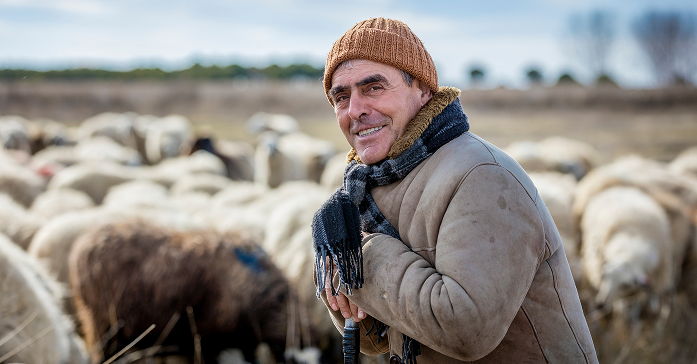
Shepherding is one of the oldest professions in the world. The duties of a shepherd, officially referred to in German as an “animal farmer,” include not only breeding and livestock management, but of course also guarding and herding sheep.
In addition to the classic German Shepherd, other breeds such as Bearded Collies, Border Collies, and Australian Shepherds are used for this work. They can guide the movement of the flock and also make sure that individual sheep do not wander off.
If the profession of shepherd appeals to you, you can look forward to three years of training, including a final examination. But make sure you get your very own shepherd’s staff. This long stick is practically the symbol and tool of shepherds. As people in the profession say: “A shepherd without a staff is not a shepherd.”
7. Assistance dog trainer
People with chronic illnesses and/or disabilities often rely on assistance dogs. One type of assistance dog that is relatively well known and that you have probably seen before is a guide dog for the blind. Since 2007, it has also been possible to learn how to train these dogs in Germany.
Daily work with patients and dogs demands more than you might initially think. You need knowledge not only of dog training and animal psychology, but also of legal principles and medical background information. It is a varied and highly responsible profession.
8. Dog sitter
As a dog sitter, your job is to care for dogs. This naturally includes long walks, playing together, feeding, and visits to the veterinarian. Since no formal training is required, basically anyone can call themselves a “dog sitter.”
However, there are some paid courses and seminars where you can gain both theoretical and practical knowledge. Since it can be rather difficult to secure a full-time job as a dog sitter, this profession is especially popular among dog lovers as a side job.
9. Dog groomer
Another profession on our list is dog groomer. You may now be wondering why dogs would need a groomer, right? There can be several reasons. Some dogs’ coats are prone to severe matting, which can quickly reduce their protection against cold, moisture, heat, and other external influences.
Fur that is too long between the paw pads makes it harder for dogs to get proper traction when walking. In addition, some dog breeds are more prone to excessive hair growth in the ears, and this hair should definitely be removed. There is no officially recognized training program for dog groomers. Interested in pursuing this calling yourself? Then you will need to acquire the theoretical knowledge on your own or learn it through private training courses.
10. Veterinary assistant
We have already reached the end of the list. As a veterinary assistant, also commonly known as a veterinary nurse or vet assistant, you assist a veterinarian in their daily work, as the name suggests. Of course, being a veterinarian is also one of the top careers that allows you to interact with dogs. However, this dream job requires a university degree.
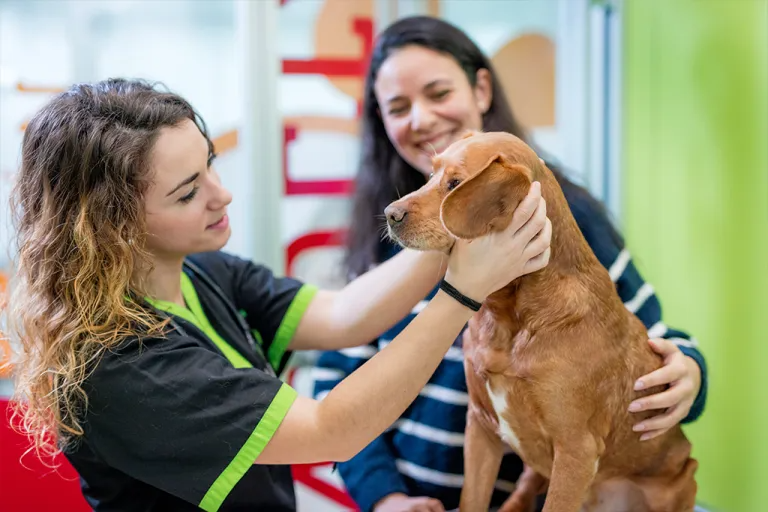
Just like veterinarians, veterinary assistants need to be aware that they will not only be caring for dogs as patients. In Germany, starting this career requires a three-year dual vocational training program.
This means that you will spend half of your time learning the job at your training company and the other half at vocational school. There, among other things, you will learn how to properly interact with animals and their owners. Since 2018, Austria has had a new apprenticeship profession called veterinary practice assistant.
Looking for a vet?
Your vet plays a big role in your pet’s health. Enter your location and get a list of vets near you.
In the spotlight
My cat is constipated, what can I do?
If you have a constipated cat at home, here you will find the symptoms, remedies and what you should do to correct and prevent this common problem in cats.
Where and how to adopt a cat
You’ve decided to adopt a cat, but where do you start? Where can you adopt your future companion?